
By Susan Reich
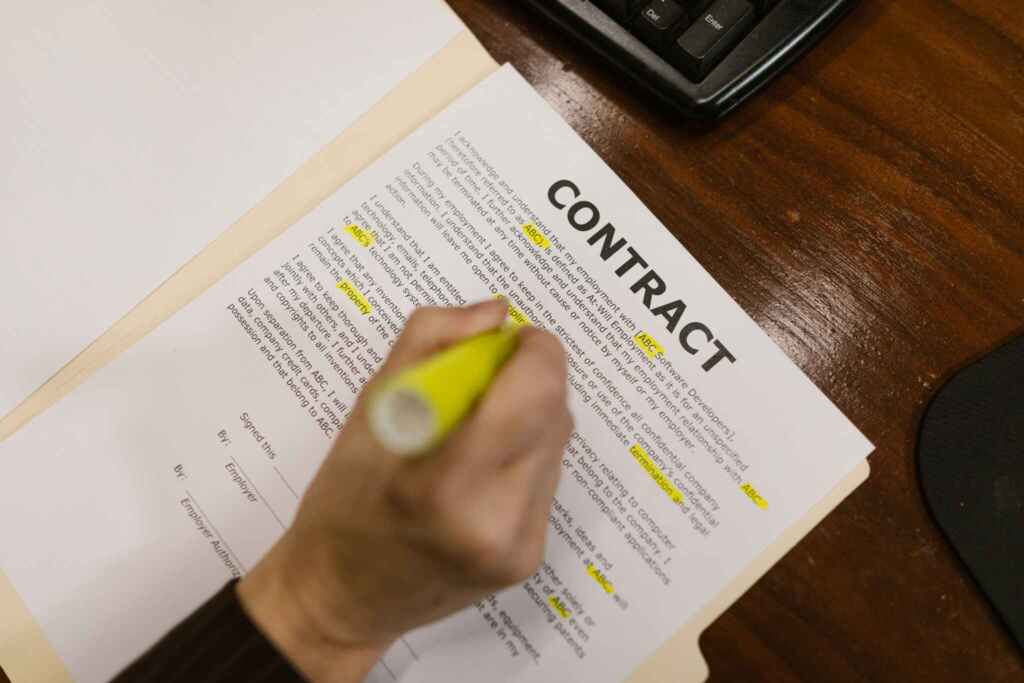
Construction contracts are supposed to memorialize a business relationship, not set up a battlefield. Yet more and more we are seeing one-sided, poorly negotiated contracts lead to worse project outcomes for everyone involved. This discussion is for the purposes of education, not what a specific surety will or won’t approve. It’s always best to spot these clauses before you sign any contracts; forewarned is forearmed. Some contractors increase their pricing 8-20% to counter the onerous clauses in contracts. Although we are not attorneys and cannot give legal advice, we can share some tips for your consideration.
This is a condensed look at the top clauses that tend to cause the most damage in prime contracts, followed by a set of issues that are specific to subcontracts and bond forms.
Top Killer Clauses in Prime Contracts
Scope of Work.
Watch for language requiring the contractor to perform anything “reasonably inferable” from the contract documents to produce the “intended” results. “Intended” results shifts design responsibility onto the contractor, who is not in a position to interpret design intent. Push to replace “intended” with “indicated,” and add an order of precedence clause so conflicts among documents are resolved predictably rather than through litigation. You also want to be sure you have the correct drawings attached at the time of contract.
Site Conditions
Some contracts have the contractor represent that it inspected the site and that the price covers all foreseen and unforeseen risks, including subsurface conditions, effectively turning the contractor into an uncompensated geotechnical engineer. Negotiate this down to a representation that the site appeared sufficient based on a reasonably observable inspection, and make clear the contractor is entitled to rely on information furnished by the owner’s consultants.
Design Liability
Some owners try to disclaim any warranty that the drawings and specifications are accurate, feasible, or constructible. This is different from the other clauses on this list because it usually cannot be softened. It needs to come out of the contract entirely, with language confirming the owner remains responsible for errors and omissions of its design team.
No Damages for Delay
These clauses make a time extension the contractor’s only remedy for delay, even delay caused by the owner. Courts disfavor these clauses and some states prohibit them outright. Where they cannot be deleted, negotiate a threshold, for example allowing damages once overall project delay exceeds 30 days. If you have a disorganized GC or an owner who can’t make decisions, this can be a killer – how can you hold your material pricing, labor, etc.? When a project is extended for a very long timeframe, there can also be additional bond premium for the contract.
Payment Terms
Look closely at how many days after invoice the owner has to pay, whether payment is contingent on the owner’s own financing, and whether the contractor can suspend or terminate if payment is late or funding is not demonstrated. Retention is another area worth negotiating, since it exists to ensure completion, not to serve as a funding source for the owner. There is a difference in “Pay-when-Paid,” and “Pay-IF-paid.” A common improvement is capping retainage and releasing it once the work reaches 50 percent complete. There are also differences in public and private projects in Florida.
Change Orders and Claim Notice.
Some contracts require notice of a claim within a very short window, such as seven days, and treat any late claim as waived regardless of whether the owner was actually prejudiced by the delay. Push for more reasonable notice periods and language tying any waiver to actual prejudice suffered by the owner. There are also differences in statutes for public work versus private work for change orders having to be approved if ignored.
Consequential and Liquidated Damages
Consequential damages such as lost profits, loss of use, and financing costs, should be expressly waived in the contract. Contracts that use “any and all damages incurred” are terrible. Liquidated damages should have a reasonable, negotiated dollar amount, a clear trigger, a cap, and ideally a paired incentive for early completion.
Termination.
Termination for cause should require notice and a real opportunity to cure, not just 24 or 48 hours. Terminations seem to occur on Friday afternoons at 4:30, so you want to encourage 5 business days. Termination for convenience should include payment of a premium or lost profits and overhead so the owner cannot use a convenience termination to avoid paying for work that was effectively terminated for cause.
Indemnification
Broad indemnity language can require a contractor to defend and indemnify the owner regardless of whether the owner itself was negligent. Limit this to third-party claims for bodily injury or property damage, tie it to the contractor’s own negligent acts, and remove any duty to defend in favor of a right to defend.
Price Escalation.
Material costs have risen dramatically faster than bid prices in recent years, and compensation for that escalation is rarely built in. Negotiating a price escalation clause tied to an agreed index, with a ceiling but no floor, protects the contractor without being one-sided against the owner.
Dispute Resolution
Watch for clauses that let the owner unilaterally choose arbitration or litigation after a dispute arises, inconvenient venue selection, and one-way attorney’s fee provisions that only allow the owner to recover fees.
Additional Concerns Specific to Subcontracts
Prime contractors often shift as much risk as possible down to subcontractors, so subcontracts deserve their own careful review. In addition to the prime contract issues above, consider:
Pass-through (AKA Flowdown) provisions. Many subcontracts reference pass-through obligations, such as liquidated damages or warranties from the prime contract, payment terms, etc., without actually specifying what those obligations are. A subcontractor should never agree to be bound by terms it has not seen and cannot evaluate. Insist that any pass-through provision be spelled out in the subcontract itself or get a copy of the prime contract so that you can see it.
Offset provisions. This applies when a subcontractor has more than one contract with a General Contractor. This gives the General Contractor the ability to take payments due to the subcontractors on one project and apply to another project/contract. This is especially messy if one project is unbonded and another is bonded. This can tie the hands of the surety claims people.
Workmanship warranty versus manufacturer’s warranty. These are frequently confused and should be treated separately. A workmanship warranty is what the subcontractor itself provides and stands behind. A manufacturer’s warranty, for example a five-year warranty on an air conditioning unit, comes from the equipment manufacturer and is not something the subcontractor bonds or guarantees. Subcontracts should clearly distinguish between the two so a subcontractor or the surety is not held responsible for a manufacturer’s obligation.
Bond Form Review
If bond forms are included with the contract, they need their own review, separate from the underlying agreement. Watch for onerous surety obligations, such as language requiring the surety to pay for “any and all loss, damage, expense, interest, costs, attorney’s fees, and statutory liabilities, fines or penalties of any kind, including but not limited to treble damages,” which the obligee may sustain.
Also review the notice provisions carefully. Some bond forms give the surety no notice at all before termination or before a claim is made, or give an extremely short cure period before the surety has to pay the obligee or subcontractors. A surety, like a contractor, needs a fair opportunity to investigate and respond before payment obligations are triggered.
The Bottom Line
Some contractors do a thorough job of reviewing and negotiating these terms before a contract is signed. Others do not, and the risk gets passed down the chain regardless and can result in losses. Taking the time to identify these clauses early, whether in a prime contract, a subcontract, or a bond form, gives everyone a much better shot at negotiating a successful project and a business relationship worth keeping. It’s important to consult a construction attorney to help you. If the surety has to pay a claim, they will look to indemnitors to reimburse them.
This blog was assembled from a combination of presentations on Consensus Docs, Contract Review and surety newsletters. Thanks to the professionals supporting our clients!