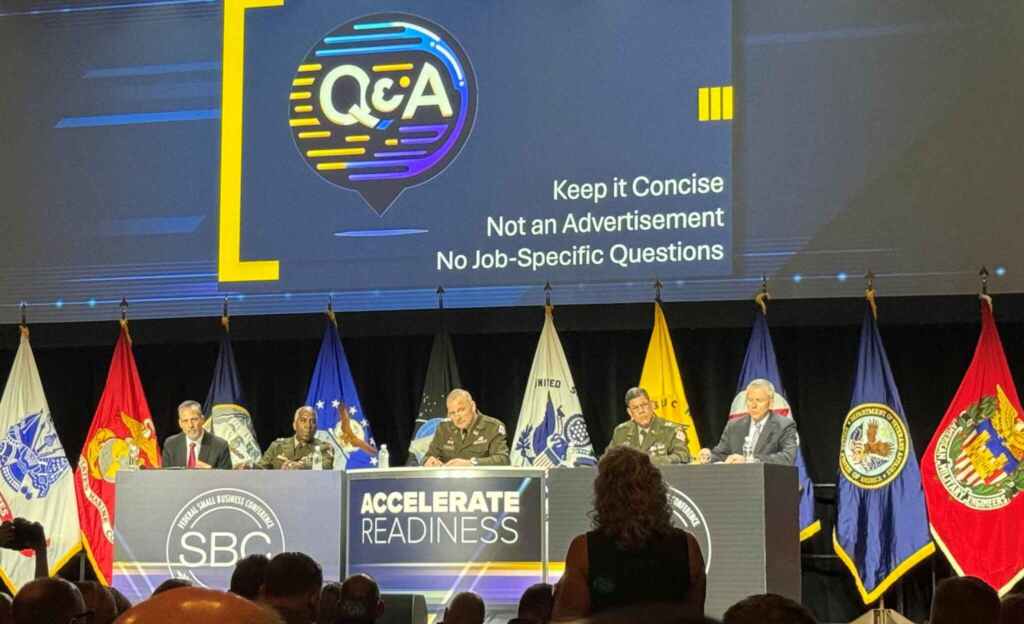
Figure 1. Emily Golecki, Florida Surety Bonds, asks Commanding Officer of Army Corps (USACE) General William Graham about forthcoming FAR changes that impact Construction Bonding reqs
The Federal Government may have been shutdown, but the FAR ( Federal Acquisition Regulations) Overhaul policy writers were hard at work. We were glad to be at the forefront of the latest Federal Contracting changes while reconnecting with the dedicated, mission-driven professionals responsible for building our national infrastructure and capabilities.
As expected, the FAR overhaul was a hot topic. We learned that unpublished FAR overhaul changes are expected in December that could have major impacts to the surety industry, construction companies and taxpayers. The Dept of War (formerly known as the Dept of Defense) is reviewing unpublished FAR changes that would push construction projects (under $9 million) under the Commercial Items FAR Section 12, where notably, Section 28 Bond requirements are not referenced as requirements. Federal Set Aside programs are also facing radical changes in an effort to simplify the acquisition process. Redlined changes from October are live, but further changes are expected that could consolidate small business setasides.
To help explain the recent FAR re-writes, it’s worth noting the intended approach: Much of the non-mandatory, prescriptive guidance, such as detailed step-by-step “how-to” procedures for implementing small business set-asides, evaluations, and compliance have been removed from the regulation and relocated to the non-binding FAR Companion Guide. This shift modernizes the language and simplifies compliance by granting contracting officers greater discretion, but it risks reducing enforceable safeguards if the guidance in the Companion Guide is not robust enough to support consistent small business advocacy.
You can read the new FAR Companion Guide 2.0 here.
You can provide Feedback on the FAR Companion Guide Version 2.0 here.
USACE Commanding Officer, General William “Butch” Graham, and his leadership team are working through the unpublished FAR changes impacting small business set asides (like 8A, SDVOSB, WOSB, HUBZONE, etc) and leaving bond requirements for construction projects $9 million and under to the discretion of the Contracting Officer. We learned about these proposed changes just before the Army Mega Session where Emily Golecki had the courage to ask the million dollar surety question to the head of USACE, General William “Butch” Graham”, Denver Heath, SES, Director of USACE Contracting (Policy maker-minded), and Maj General Jason Kelly, USACE Civil Works & Emergency Operations. It was an engaging and collaborative forum. A clip of the transcript below confirmed the Dept of War is considering moving Construction to Commercial Items in FAR:
Army Mega Session Q&A where Emily Golecki, Florida Surety Bonds asked Bonding Question to USACE Leaders:
Emily Golecki, Florida Surety Bonds: I heard it on good account that on the construction side, you’re looking to potentially move it under the commercial umbrella for projects $9 million and under, and also have the ability to waive the performance and payment bond requirement for these contracts, and I urge you to not remove that regulation, because it protects not only you as the bond user, it protects the taxpayer by having that performance requirement of that bond and also the payment protection to sub suppliers and vendors downstream. You can’t lien public work or public land. Having that performance and payment bond in place provides that payment protection to small businesses and to the subcontractors that are working under these primes, who sometimes have a history of slow pay. It’s under the Miller Act. I hope that you guys can take that into consideration when making these decisions, because ultimately, if those contractors default, they’re more likely to be small businesses, and it’ll end up costing you anywhere from 30 to 40% (closer to 80%) more to hire a replacement contractor who’s going to put their mark up on it to get the job over the finish line.
General William “Butch” Graham, USACE Commanding General: Ma’am, thanks..Broadly, as we’re looking to go faster, as we’re looking to go smarter, it doesn’t mean we throw all the good things out. We were talking today about that, but make sure that the baby doesn’t go out with the bath water, clearly, because there’s a lot of things that were in our procedures been in place for a long time that have great value…The Government, not just the Army Corps of Engineers, is seeking to do things faster together. It’s, you know, it’s a tired discussion about regulatory framework that we operate under. And one of the common concerns we’ve often had is about thresholds. So I know, yesterday we talked about this a little bit Denver, if you, if you want to talk about the specifics of this reform, but I think it goes into this larger environment we’re operating in. All requirements are being discussed about what would be the most beneficial for the government.
Denver Heath, SES, USACE Director of Contracting: This is something that is in the works and coming down in terms of looking at Construction as a Commercial Item. That has not ended. We’re still waiting, even though all 52 chapters of Federal Acquisition Regulation have been rewritten. This is being considered at the Department of War level, and we’re waiting on the effects to the Federal Acquisition Regulations, and then we will act within the Army Corps for Engineers to move forward. Bonding is important. We’ve long relied on bonding to protect the government and also payment to the subcontractors.
While the USACE Director of Contracting confirmed that the Construction as a Commercial Item is in works and highlighted the value of performance and payment bonds, he didn’t clarify the bonding implications since its at the Dept of War (DOW) level.
Determined to find the policymaker who understood the technical FAR policy intricacies , we continued our search and were ultimately connected with the Chief of Procurement Policy at USACE Headquarters who was exceptionally knowledgeable. She explained that the proposed FAR update would move Construction projects under $9 million to Commercial Items Section 12 of FAR which doesn’t not include bond requirements reference to Section 28, it just says bonds are “as needed.” She thought adding the Section 28 reference would be simplest solution to fill the gap and honor the Miller Act legislative requirements. She offered to request the bonding requirement reference be added through the DAR council. What an elegant and simple fix to an unintended consequence! I am so glad we were there to work through this. This is exactly what I value about this industry and the collaborative Army leadership we have the privilege to work with.
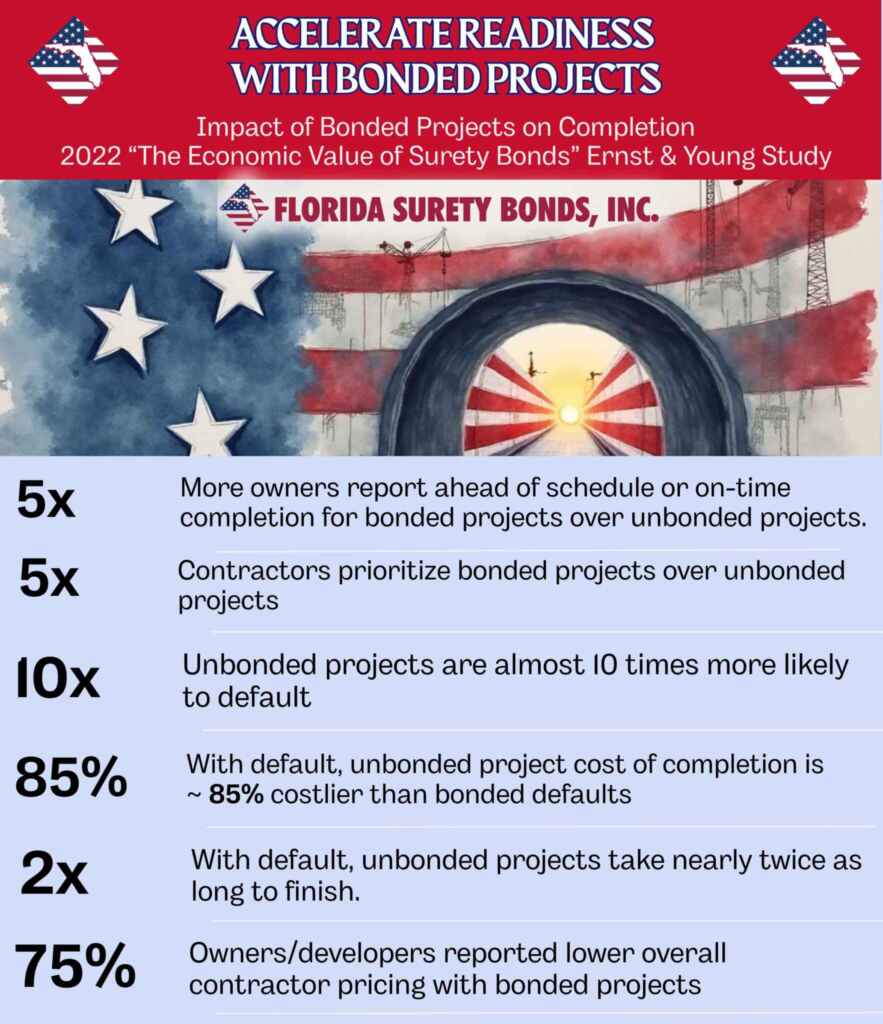
As the federal market continues to accelerate readiness, performance and payment bonds remain one of the strongest tools to get there. Five times more owners report ahead of schedule or on-time completion for bonded projects over unbonded projects. P&P bonds guarantee the construction projects are performed per the contract and that the subcontractors and suppliers on the project are paid.
P&P Bonds are not just benefiting the Government agency obligees.
In 2024, 70% of General Contractors experienced an increase in subcontractor defaults, creating costly setbacks and project delays. Forward-thinking GCs are benefiting from bonding back their key subcontractors above established thresholds to limit the burden of rising subcontractor defaults and keep projects moving. We are happy to discuss bonding with you and make it as seamless as possible.